Back
BackSouth Africa is the most unequal society in the world, and nowhere does this manifest more dramatically than in the youth unemployment rate. Official 2025 data also reveals that among youth aged 15 to 34, nearly 1.9 million are classified as discouraged job seekers. Of approximately 10.3 million people in the 15–24 age group, well over 60% are unemployed, and over half report no prior work experience.
These young people will search for opportunity for years in the face of scams, misleading adverts, and a lack of credible information. They will bear burdensome search costs, such as disproportionately expensive transport and internet access. And if they do manage to find and successfully apply for a job, exclusionary hiring practices – such as adverts for entry level positions that require years of experience, or qualifications that have little to do with the actual work – often keep them locked out. The situation is particularly dire for young women, whose barriers to work-seeking are higher and harder than they are for young men.
Over the years, South Africa’s unemployment challenge has attracted significant public and private investment that flows to various forms of post-school education and training each year. While there has been some success, efforts are disjointed and poorly coordinated across states, markets and civil society. There are many reasons for this. Some have to do with the social, economic and geographic legacies of apartheid; others are a result of infrastructure challenges in delivery.
But there’s another, deeper reason that has increasing importance for how we address the challenge: The continued prevalence of outdated assumptions about the transition from education to employment.Much of the investment that has flowed into addressing the unemployment crisis has rested on a fundamental belief that “more skills / degrees / training leads automatically to a leg up on opportunity”. But this truism is under assault from every side around the world:
Jobless growth, coupled with rising automation and the changing nature of employment, mean that the jobs of tomorrow do not look like the jobs of yesterday. In South Africa’s case, the sheer scale of investment has created a level of institutional incumbency that hampers efforts to adapt to these seismic shifts.
We pull together, for scale
Harambee Youth Employment Accelerator was founded in 2011 as a social enterprise designed to solve youth unemployment through partnerships.
Our early days partnering with the South Africa National Treasury’s Jobs Fund gave rise to regional partnerships with the City of Johannesburg and the Gauteng Provincial Government – the country’s economic hub. With youth unemployment climbing to record levels during the pandemic (over 66% for youth age 15-24, at the last release of Stats SA’s Quarterly Labour Force survey), this coalition of stakeholders acknowledged the inadequacy of status quo approaches and sought a bolder, more systemic response.
To solve a problem this massive, everyone needs to be an equally invested partner, wanting to solve together. In April 2019, the Presidential Youth Employment Intervention (PYEI) was established as South Africa’s national plan of action on youth unemployment. It is supported by a dedicated project management office in the Presidency that coordinates the efforts of state and non-state actors. It has defined a ‘national pathway management network’ – new, transformational infrastructure to support the transition from education to work – as its first priority.
SA Youth
SA Youth, the anchor platform for the national pathway management network, is a multi-stakeholder partnership between government, the private sector and civil society, in which Harambee is an anchor member. SA Youth addresses many barriers faced by young people.
- It is a zero-rated, free-to-use website that can be accessed through any device, supported by a toll-free support line.
- By aggregating learning and earning opportunities from as many partners as possible in the private sector, government, and civil society in a single place and for free, SA Youth ensures that millions of unemployed young work-seekers, no matter where they live or what their circumstances, can easily access credible information that links them to the right opportunities.
- This service is delivered through both platform intelligence (with data-powered recommendations) and the human intelligence of hundreds of “guides,” most of whom are specially-trained youth from very similar demographics, who staff a toll-free hotline answering young unemployed callers’ questions and directing them to resources.
The platform also creates enormous value for its institutional participants. For employers seeking to increase inclusive hiring, the network represents a pool of formerly invisible talent that’s pre-qualified and well-supported through the process. Most importantly, SAYouth provides a heat map of the human resources of the future, which is especially critical for emergent industries seeking to harness South Africa’s young, English-speaking, “high-EQ” workforce to power growth.
Take the example of plumbing – a skilled role in high and growing demand: through collaboration and an enabling partnership between Harambee and the Institute of Plumbing in South Africa (IOPSA), the sector has identified root causes of its challenges in appropriately sourcing and skilling young people as artisans who are ready to tackle their apprenticeships with willing and supportive employers. In response, it has now introduced two game-changing education models for plumbing.
Over time, the platform itself will learn, showing us which pathways and interventions work well; where demand is unmet; and which barriers remain. With growing data, intelligence and capabilities, this platform can serve as a powerful infrastructure for inclusive growth.
Now, Harambee is on the journey to recruit a further 3 million young people into the network and enable at least 1 million pathways into concrete opportunities and increased income through the formal and informal sectors and public employment.
Importantly, we hope to ensure that SA Youth creates value to a young person even when they are not in employment–building their employability profiles between jobs. In doing so, we hope to deal a death blow to the intergenerational cycle of joblessness, and lay the foundation of a society that works, with an economy that is powered by the potential of all young people.
Lessons learnt from Thinking & Designing for scale…
Into that future, we will bring a our decade’s worth of lessons maybe hold value for any organisation seeking to make a dent in youth unemployment – or indeed any complex, entrenched social problem:
- First, we cultivated and leveraged ‘hard demand’
This is distinct from voicing demand for change; it means identifying real growth opportunities that can absorb young people, given the changing nature of work. For Harambee and our partners, starting on the demand side of the labour market to find unfilled vacancies, and targeting the companies and sectors where a talent shortfall is a gating factor on growth, generated “pull” rather than push for solutions and brought a wider range of motivated partners to the table. - Second, we tested, pilot, and prototype at the point of friction
Even if the destination is to create industrial-strength infrastructure, begin with small interventions aimed at the points of market failure (in our case, the point at which a young person with potential misses out on a viable opportunity) and build the platform architecture up from there, designing for the lived realities of the most excluded. For us, that has enabled the creation of a platform that has young people–and young women in particular – firmly at the centre. - Lastly, we needed to scale ecosystem, not a product or solution
Most organisations and funders tend to want to scale their solutions. With a multi-dimensional and moving problem like youth unemployment, falling in love with our own solutions meant a risk that we would stop following the problem and instead become another institutional interest in the system. Durable impact means taking a systems lens to solve ecosystem challenges; in our case, working with a vast and disparate range of partners on everything from advocating to reduce mobile data costs, to prototyping new funding models for training, to advising on sector-specific talent master plans. This last learning is perhaps the greatest.
The sustained power of SAYouth lies in the fact that it is more than a platform: it is the embodiment of a vast ecosystem, with a shared vision and aligned interests. The true magic happens when states, markets and social enterprises work together. The saying “To go fast, go alone; to go far, go together,” has always resonated deeply in the African context. But for those of us seeking to change the trajectory of employment in South Africa, it has never been truer.
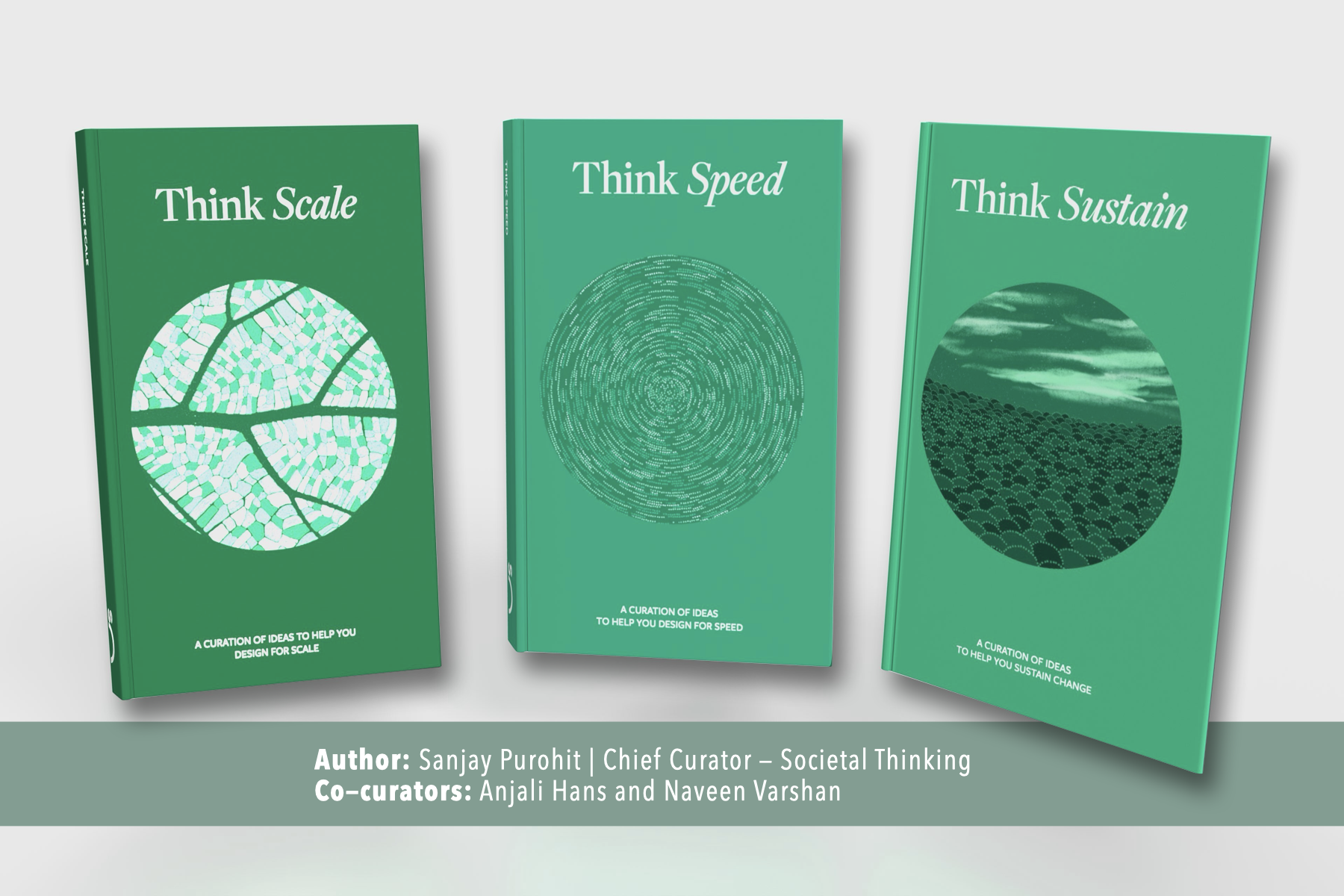
Want to think scale too? Read more.